
A Temple That Stands Apart in Vrindavan
Sri Rangaji Temple, also known as Sri Ranganatha Mandir, is one of the largest and most distinctive temples in Vrindavan. In a town celebrated for its Krishna devotion, this temple draws attention for its scale, its spiritual atmosphere, and its unusual architectural identity. Dedicated to Lord Ranganatha, a reclining form of Lord Vishnu, Sri Rangaji Temple reflects a devotional tradition that connects the sacred landscape of Braj with the rich temple culture of South India.
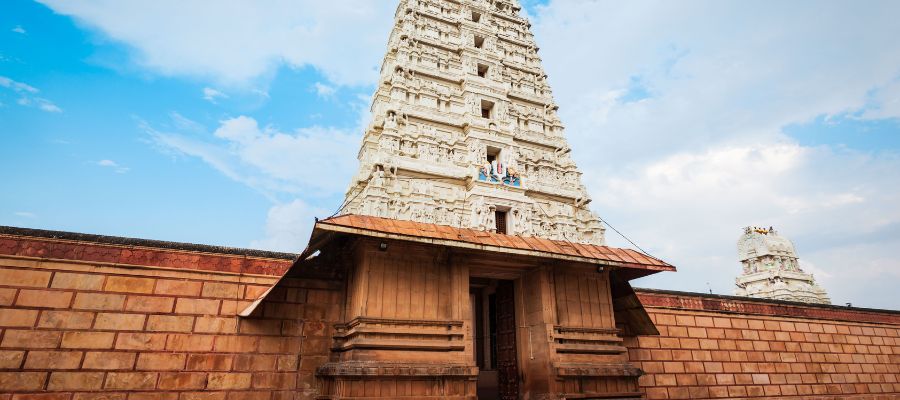
For many visitors, the experience of arriving at Sri Rangaji Temple is striking from the very beginning. The temple does not resemble the compact, courtyard-style shrines that are often associated with Vrindavan’s older lanes. Instead, it presents itself as a vast sacred complex with monumental features, disciplined symmetry, and a sense of ceremonial grandeur. It feels less like a neighborhood temple and more like an entire spiritual campus, built to inspire reverence through both worship and architecture.
A South Indian Temple Presence in Braj
One of the most remarkable aspects of Sri Rangaji Temple is the way it brings South Indian Vaishnava traditions into the devotional setting of Vrindavan. The temple is dedicated to Lord Ranganatha, a revered form of Vishnu worshipped in the reclining posture, and many of the rituals and visual elements associated with the temple reflect this lineage. This gives the temple a very special identity within Vrindavan, where most sacred sites are closely associated with Krishna’s Braj leelas and the region’s own local temple traditions.
The result is a rare cultural and devotional blend. Here, visitors encounter a temple that feels deeply rooted in Vaishnava faith while also expressing a different regional language of worship. This makes Sri Rangaji Temple important not only as a place of darshan but also as a site where India’s sacred traditions visibly meet and coexist.
Monumental Architecture and a Strong Visual Identity
Sri Rangaji Temple is widely admired for its architectural scale. The high gopuram immediately sets the tone, announcing the temple’s South Indian inspiration even before one enters the main complex. Rising above the surrounding area, it creates a dramatic first impression and gives the temple a commanding presence in the Vrindavan skyline.
Inside the complex, the experience becomes even more expansive. The long pillared corridors, tall enclosing walls, and large water tank contribute to a feeling of order, space, and sacred rhythm. These features are not merely decorative. They shape the way visitors move through the temple and help create a devotional environment that feels both grand and contemplative. The water tank adds to the temple’s traditional atmosphere, while the corridors and open spaces allow the architecture to be experienced slowly rather than all at once.
This large-scale design gives Sri Rangaji Temple the feel of a South Indian temple transplanted into Braj. Yet it does not seem out of place. Instead, it adds another dimension to Vrindavan’s sacred landscape, reminding visitors that devotion can take different architectural forms while remaining spiritually connected.
A Blend of Dravidian and North Indian Elements
Although the temple is strongly influenced by South Indian temple design, the architectural experience inside also reveals a blending of traditions. Visitors can notice features that reflect both Dravidian and North Indian styles, creating a character that is unique rather than purely regional. This blend is one of the reasons the temple is so visually interesting.
The beautifully carved pillars are among its most memorable features. They bring detail, rhythm, and elegance to the larger structure, proving that even within a monumental temple complex, craftsmanship remains central. During festival seasons, seasonal decorations add another layer of beauty to these architectural features. Flowers, fabrics, lights, and ceremonial arrangements help transform the already impressive interiors into a more festive and emotionally engaging space. This changing visual atmosphere allows repeat visitors to experience the temple differently at different times of the year.
A Sacred Space of Ritual and Reverence
At its heart, Sri Rangaji Temple is not simply admired for its architecture. It remains a living temple where ritual, devotion, and daily worship continue to define the experience. The presence of Lord Ranganatha gives the temple its spiritual center, and visitors come not only to appreciate the structure but to seek darshan and participate in the atmosphere of faith.
There is a certain dignity in the way the temple functions. The scale of the complex does not reduce the devotional intimacy of the experience; rather, it deepens it by surrounding worship with grandeur and sacred order. As visitors move through the corridors, pause near the shrine, or observe temple rituals, they often feel the discipline and continuity of a tradition that has been carefully maintained over time.
The Color and Energy of Annual Festivals
Sri Rangaji Temple becomes especially vibrant during its annual festival celebrations, particularly the Rath-yatra and Brahmotsava processions. These events are among the most colourful and memorable occasions associated with the temple. During these celebrations, the deity is taken out in chariots and carried through the town with ceremonial honor, accompanied by Vedic chants and nagasankirtan.
These processions bring the temple’s devotional life into public view in a powerful way. The movement of the chariots, the sound of chanting, the participation of devotees, and the festive decoration all come together to create an atmosphere of joy, reverence, and sacred celebration. For local residents, these festivals are an important annual tradition. For visitors, they offer a rare chance to witness temple culture not as a static heritage display, but as a living, collective act of devotion.
The energy of these processions also shows how deeply the temple remains connected to the spiritual life of Vrindavan. Though it carries a distinctive South Indian identity, its festivals become part of the shared devotional rhythm of the town.
Why Sri Rangaji Temple Holds Lasting Importance
What makes Sri Rangaji Temple truly significant is the way it combines scale, devotion, and cultural character. It is one of the largest temples in Vrindavan, but its importance goes beyond size. It offers a rare architectural experience, preserves an important Vaishnava tradition, and enriches the sacred diversity of Braj. It is a place where devotees can encounter Lord Ranganatha in a setting that feels regal, serene, and spiritually grounded.
For architecture lovers, the temple offers a fascinating study in form, proportion, and regional influence. For pilgrims, it provides a deeply meaningful place of worship. For general visitors, it reveals another side of Vrindavan—one that expands the town’s identity beyond familiar temple forms and shows the wider spiritual connections of India’s devotional traditions.
A Temple That Expands the Spiritual Landscape of Vrindavan
Sri Rangaji Temple remains one of Vrindavan’s most remarkable sacred landmarks because it offers something both distinctive and deeply rooted. With its towering gopuram, vast corridors, water tank, carved pillars, and grand festival processions, it presents a temple experience that is at once majestic and devotional. It brings the spirit of South Indian Vaishnavism into the heart of Braj while still feeling fully at home in Vrindavan’s sacred world.
For anyone exploring the temples of Vrindavan in depth, Sri Rangaji Temple is not just a place to visit—it is a place to absorb. Its architecture, rituals, and festival traditions together create an experience of devotion that is grand in scale, rich in symbolism, and memorable in every season.